Insurtechs: At the age of maturity, the real challenge begins
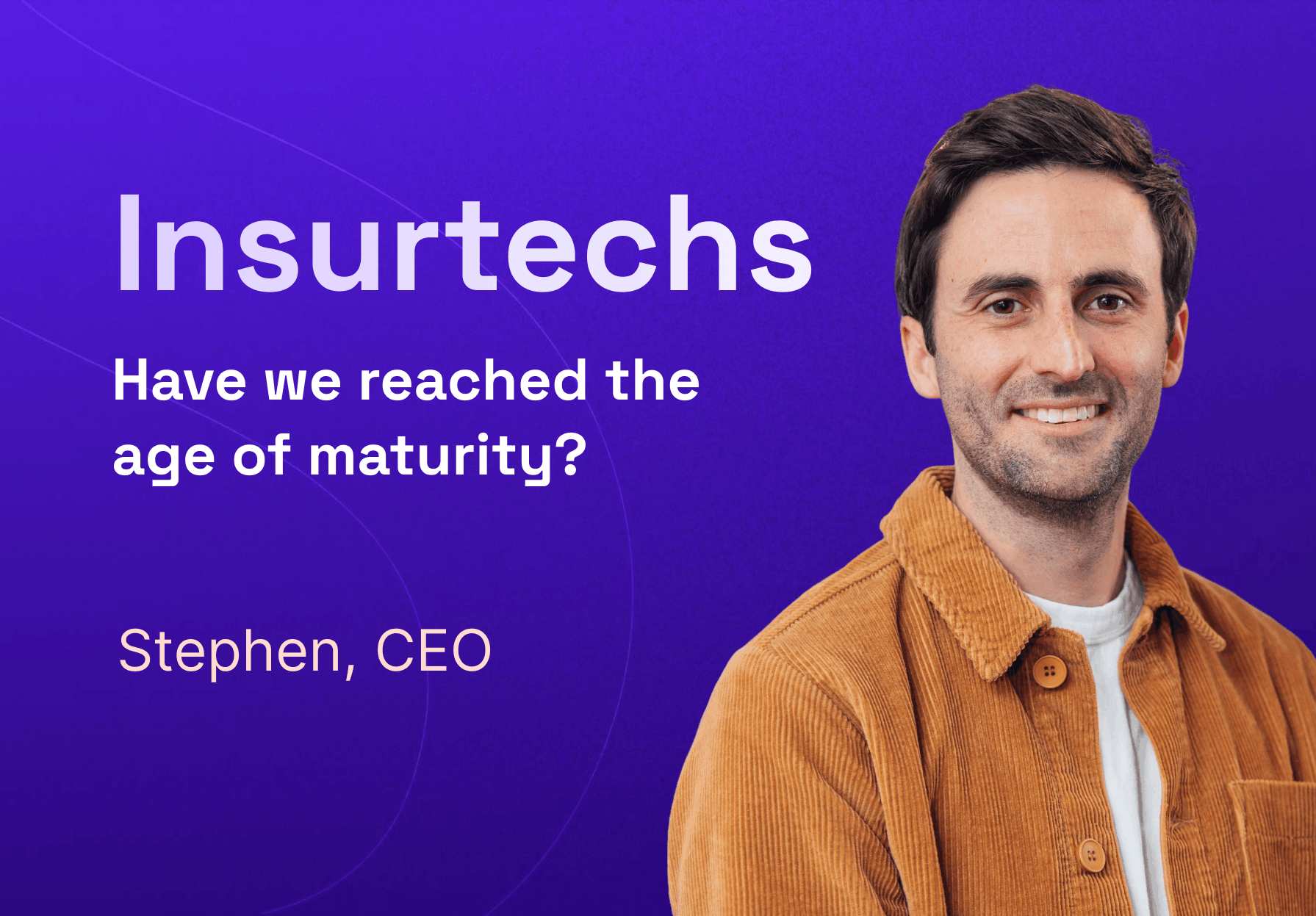
by Stephen Leguillon, CEO of Seyna

After flashy launches and several years of effort, some insurtechs have reached a stage of maturity by solving concrete market problems. What challenges now lie ahead?
From Capital Abundance to the Desert Crossing
Between 2015 and 2021, the insurance industry witnessed the emergence of a new generation of insurtechs, fueled by unprecedented levels of funding and a strong ambition to modernise the sector. A global peak was reached in 2021, with a record $15.8 billion invested in the sector (1).
In a low-interest-rate environment where capital was cheap, venture capital funds were well supplied, and the trend of blitzscaling encouraged founders to “grow first, capture market share, and rationalise later,” it was rational for entrepreneurs to build large-scale companies rapidly, even at significant cost. Insurance was no exception.
Several start-ups in the sector experienced spectacular growth, backed by major funding rounds. In 2021, Alan raised €185 million (2), and Lemonade accumulated more than $480 million in funding before its IPO. This expansion phase reshaped the market.
Then the cycle turned in 2022: access to abundant capital disappeared (3). After the historic peak of 2021, global insurtech funding dropped by around 50 percent in 2022 and declined again sharply in 2023 (4). As interest rates rose, capital became scarce and valuations were rationalised.
This shift revealed a simple reality: models without a true differentiator or strong market value proposition quickly came under pressure (5).
Only companies that solved genuine problems — previously poorly addressed by incumbent players — survived (6). Alan made group health insurance simple for companies and user-friendly for employees. Akur8 tackled pricing complexity, enabling insurers to better control their underwriting models. Shift focuses on fraud detection, one of the most critical cost drivers in the industry. +Simple reorganised professional distribution, streamlining a historically slow and fragmented value chain.
These companies survived because they create margin where it had eroded, because they solve real client problems, and because they do it better than the rest of the market.
If we describe them as “mature,” it is not merely a question of revenue, headcount or valuation. It is also a matter of status: they have earned the trust of a significant number of clients in the market.
Alan now wins public-sector mandates (7). Akur8 equips leading insurers such as AXA (8). Seyna works with major brokerage leaders including Marsh and APRIL (9). When an established player entrusts you with its business — especially in insurance, a trust-based, long-term industry — it means they expect you to still be there in ten years.
Why Maturity Is No Longer Enough
These insurtechs have proven a viable economic model. They control their customer acquisition costs, improve margins quarter after quarter, and have internalised the technical insurance expertise required to manage their business sustainably. Funding is now used to accelerate the model, not to compensate for its absence.
But reaching maturity is not an end in itself. It can mark the beginning of a new risk: becoming too static to continue progressing. This is a textbook illustration of Christensen’s Innovator’s Dilemma (10): companies that have found their model are often those that struggle most to imagine a new one. When organisations stop challenging themselves, faster and more efficient competitors inevitably overtake them.
This is precisely when the risk of obsolescence emerges. A far more radical competitor is arriving: the AI-native model.
AI is not a marginal productivity enhancement. It enables insurance to be rebuilt around radically lower cost structures, near-instant execution, and the automation of entire operational processes that our current organisations still handle manually (11).
An AI-native player can manage a claim, price a risk or support a policyholder at a cost and speed that surpass models built over the past decade. Processes optimised over many years — such as claims management chains or web-based acquisition journeys — can become obsolete in seconds as access to insurance shifts toward AI-powered conversational interfaces.
For insurtechs that have become “mature,” the risk is clear: those that still view AI as a simple efficiency lever, rather than as a business model in itself, expose themselves to rapid obsolescence.
For many insurance business models, an AI-native alternative will emerge and challenge all competitors, whether founded in 1980 or 2020 (12). Maturity is therefore not a final state but a new starting point. The real challenge is no longer to become viable, but to remain so as the market transforms once again. If we refuse to disrupt ourselves, someone else will do it for us (13).
- Gallagher Re – Global InsurTech Report 2022
- JDN - L’assurtech française Alan lève 185 millions d’euros et devient une licorne
- PitchBook – VC deals down 2022–2024 / Crunchbase – “The fintech funding winter continues” (2023)
- Gallagher Re – Global InsurTech Report Q4 2022 and Q4 2023
- Deloitte, “Future of insurance” (2022–2024)
- McKinsey, “Insurance 2030” (2023)
- Challenges, “Alan, l’assureur santé parti à la conquête de la fonction publique”
- Frenchweb “Akur8 lève 120 millions d’euros”
- L’ARGUS de l’assurance, “Assurtech, dix ans après : où en sont les start-up de l'assurance ?”
- Christensen, Clayton M. (1997). The Innovator’s Dilemma. Harvard Business School Press.
- McKinsey & Company, “The future of AI in the insurance industry”
- Mandalore Partners, “AI in Insurance: From Claims Automation to Risk Prediction”
- Gallagher Re Global InsurTech Report Q2 2025, “57.1 % of InsurTech deals went to AI-centred companies in Q2’25.”